
Hawaii law requires every cesspool in the state to be converted by 2050. If your home has one, this guide covers what the law actually says, what converting costs, what your options are, and what financial help exists right now — in plain language, from a local company that works on cesspools every week.
Hawaii Cesspool Conversion Guide
The short version
- Every Hawaii cesspool must be upgraded, converted to septic, or connected to a sewer by January 1, 2050
- There is no requirement to convert today — but waiting has real costs
- A typical conversion runs $25,000–$50,000 depending on the property and the option
- A new state loan program launches in late 2026, with possible zero-interest loans for Oʻahu
- Until you convert, keep your cesspool pumped and get a straight answer on your options
Questions about your cesspool? Estimates are free and we answer 24/7.Call (808) 630-9966
What the law actually says
In 2017, Hawaii passed Act 125, which requires every cesspool in the state to be upgraded, converted, or connected to a sewer system by January 1, 2050. Hawaii was also the first state to ban new cesspools, back in 2016.
The reason is scale. Hawaii has roughly 88,000 cesspools — more than any other state — and every one of them releases untreated sewage directly into the ground. On Oʻahu alone, the Hawaiʻi Department of Health counts more than 11,000 cesspools, together putting an estimated 7.5 million gallons of untreated wastewater into the ground every day. That wastewater does not disappear: it moves into groundwater, where much of our drinking water comes from, and out to the reefs and beaches.
Nobody loves the price tag, but the direction is set. The cesspool era in Hawaii is ending — the only question for homeowners is when, and on what terms.
How to find out if your home has a cesspool
Many Oʻahu homeowners honestly are not sure what is under their yard. There are a few ways to find out:
- Your property documents — closing paperwork or a past inspection usually names the system
- State records — the Department of Health keeps records of registered cesspools
- The University of Hawaiʻi Sea Grant cesspool map, which shows locations and priority levels
- Ask us — if we pump your system we can tell you exactly what you have, at no charge
For a walkthrough — what to look for in the yard, on the water bill and in the records — read cesspool, septic or sewer: which do I have?
What the DOH cesspool priority levels mean
Every cesspool in Hawaiʻi now carries a priority level, and it is the one thing on the map that changes what the 2050 requirement means for you. Two systems have used the same numbers, so it is worth knowing which one you are looking at.
The 2017 report. Act 125 told the Department of Health to rank cesspools for replacement. Its 2017 report to the Legislature flagged 14 areas of the state and sorted them into four categories: Priority 1, areas where cesspools present a significant risk of human impacts, drinking water impacts, or draining to sensitive waters; Priority 2, areas with the potential to impact drinking water; Priority 3, areas with the potential to impact sensitive waters; and Priority 4, a placeholder for every cesspool the Department had not yet fully analyzed. The two highest-priority areas it named were Upcountry Maui and Kahaluʻu, on Oʻahu’s windward side, with about 740 cesspools.
The prioritization tool. Act 132 (2018) created the Cesspool Conversion Working Group, and the Hawaiʻi Cesspool Prioritization Tool built for it re-scored every cesspool in the state by census tract — on how many cesspools sit in the area, the soils, how close they are to drinking-water wells, streams and the shoreline, and what sits downstream of them. The tool kept the old numbers but retired the placeholder, so every cesspool now falls into one of three levels. Priority 1 is the greatest contamination hazard (red on the map), the top 25% of scores. Priority 2 is a significant hazard (orange), the next 25%. Priority 3 is a pronounced hazard (yellow), the bottom half. Statewide that is 13,821 cesspools in Priority 1, 12,367 in Priority 2 and 55,237 in Priority 3 — and about 35% of all Priority 1 cesspools are on Oʻahu.
- Priority 1 — greatest contamination hazard. The Working Group’s final report recommended converting these by 2030
- Priority 2 — significant contamination hazard. Recommended by 2035
- Priority 3 — pronounced contamination hazard. Recommended by 2050, the deadline already in law
- No level is exempt — the tool’s authors are explicit that every cesspool is a substandard system that poses some threat to its surroundings
What your level means for your timeline. The only deadline in law is still January 1, 2050, for every level. The Working Group’s final report to the 2023 Legislature recommended replacing it with a staggered schedule — Priority 1 by 2030, Priority 2 by 2035, Priority 3 by 2050 — along with conversion at point of sale and a seller’s disclosure requirement. The Legislature has not adopted that schedule; the “Do I have to convert right now?” section above covers where the proposals stand. Priority has already decided money once: the state’s 2023 pilot grant, since expired, was open only to cesspools in Priority 1 or 2 areas. So if you are in Priority 1 or 2, plan as though your deadline is earlier than 2050 and expect to be first in line for whatever help exists; if you are in Priority 3, 2050 is the date and nobody has proposed moving it.
To find your level, look your parcel up on the University of Hawaiʻi Sea Grant Cesspool Prioritization Tool, or start with our Oʻahu cesspool data, which puts 1,340 of the island’s 6,763 owner-matched cesspool parcels in the highest tier.
Do I have to convert right now?
No. As of mid-2026 the only deadline in law is 2050, and there is no requirement to convert when you sell a home — though sellers must disclose a cesspool, and buyers increasingly factor the conversion cost into their offers.
But here is the honest picture of why leaving it until 2045 is a risky plan:
- Deadlines may move up — lawmakers keep proposing 2035–2040 for high-priority areas
- Hawaii converts only about 400 cesspools a year; at that pace 88,000 would take over two centuries
- As 2050 nears, tens of thousands of owners will compete for the same contractors and permits
Your three conversion options
Every property is different, but conversions come down to three paths. Typical Hawaii conversions run $25,000–$50,000; the right option — and the real number — comes from a site and soil assessment, not a guess over the phone. On most Oʻahu lots the septic path means a tank and a drain field; where the ground will not take one, it means an aerobic treatment unit.
- Connect to the county sewer — cleanest long-term answer where a main runs nearby
- Install a septic system — the most common and usually most cost-effective conversion
- Install an aerobic treatment unit — for small lots, poor soils, or shoreline properties
- Cost depends on lot size, soil, and distance to a sewer main
- A site and soil assessment tells you which one your property can actually support
Will a septic system fit on your lot? The DOH sizing rules
The first question a small-lot owner asks is whether a septic system is even allowed. The answer is set by the Department of Health’s wastewater rules, Hawaiʻi Administrative Rules Chapter 11-62, and they are specific:
- 10,000 square feet of land area for each individual wastewater system, and the lot itself may not be smaller than 10,000 square feet
- Lots under 10,000 square feet that were created and recorded before August 30, 1991 are the exception — they are allowed one system, and only one
- One system may serve no more than five bedrooms, whether they sit in one dwelling or two, and no more than 1,000 gallons a day
- The tank is sized by bedrooms: at least 1,000 gallons for four bedrooms or fewer, 1,250 gallons for five
- The drain field is sized on 200 gallons per bedroom per day, against the Department’s absorption-area table
- A “bedroom” is any room that could reasonably be slept in — 70 square feet or more with a window — not only the rooms labeled bedrooms on the plan
Two things follow. A house that passes five bedrooms — a main house plus a rental counts together — needs a second system and, under the 10,000-square-foot rule, the land to put it on. And the ground has the final say: where the soil will not percolate, the water table sits high, or a drain field simply will not fit, the design moves to an aerobic treatment unit, which treats the wastewater in the tank and needs far less ground to dispose of it. The percolation test and the engineered design settle it, which is why the assessment comes before any number.
Pre-1991 lots under 10,000 square feet with a cesspool are common in older Oʻahu neighborhoods, and they are exactly the properties where “one system, no more” and the bedroom count have to be worked out before anyone quotes. Where a conventional drain field is possible, it is usually the cheaper path; where it is not, the ATU is what the rule points you to.
What a conversion costs, line by line
The $25,000 to $50,000 figure is a total, and totals are hard to plan around. Here is roughly where the money goes on a typical Oʻahu conversion. The evaluation and engineering figure is what we see on Oʻahu; the rest are the ranges reported across Hawaiʻi. All of them move with site access, soil type and how difficult the ground is — your own number comes from a site assessment.
- System evaluation and engineeringSite evaluation, percolation testing, drawings for the state — more with hard access or difficult soils$3,500 – $5,500
- Permits and state feesDepartment of Health review before any work starts$500 – $1,500
- System and installationTank, excavation, leach field, closing the old cesspool$15,000 – $45,000+
- Aerobic treatment unit, if requiredHigh water table, poor soils, or close to the shorelineadd $5,000 – $10,000
Two things push a job toward the upper end. The first is ground: hard rock, a high water table, or steep or tight access all mean more machine time. The second is distance — long pipe runs and awkward truck access add labor to every stage. Materials and heavy equipment are imported, which is why the same work costs more here than on the mainland.
- Ground conditions — rock, high water table, or saturated soils
- Access — slope, tight lot lines, and how close a truck can get
- Distance from the house to where the new system can legally sit
- Whether a standard leach field is possible, or an ATU is required
Start by having someone look at it
Nobody should commit to a five-figure conversion off a web page. Before any of that, we will come out, look at what you actually have, and give you a free, no-obligation estimate.
You get a straight read on your system and what the work would realistically involve — before you spend anything on engineering. Call (808) 630-9966 to set one up.
Curious how many cesspools are actually left on the island, who owns them, and how close they sit to the water? We published the numbers: Oʻahu cesspool data, 2026.
What financial help exists right now
This is the part of the picture that changes most often, so here is where it stands as of mid-2026:
- New: the state Cesspool Conversion Revolving Loan Program, launching by the end of 2026
- It is funded with $2 million in state funds plus $625,000 from the City and County of Honolulu
- Because of Honolulu’s contribution, Oʻahu owners applying before 2030 may qualify for zero-percent interest
- Expired: the old $10,000 state tax credit (ended 2020) and the $20,000 pilot grant program
- Proposed but not yet passed: a new tax credit covering 35% of conversion costs
What converting actually looks like
A typical conversion project on Oʻahu runs through six stages. End to end most take a few months — and most of that is design and permitting, not construction.
- 1. Site and soil assessment — what you have, where the space is, what the ground supports
- 2. System design — an engineer designs the septic system, ATU, or sewer connection
- 3. Department of Health permit — the design is approved before any digging
- 4. Installation by a licensed contractor
- 5. Cesspool closure — the old cesspool is pumped out and properly closed
- 6. Final inspection and sign-off
Until then: take care of the cesspool you have
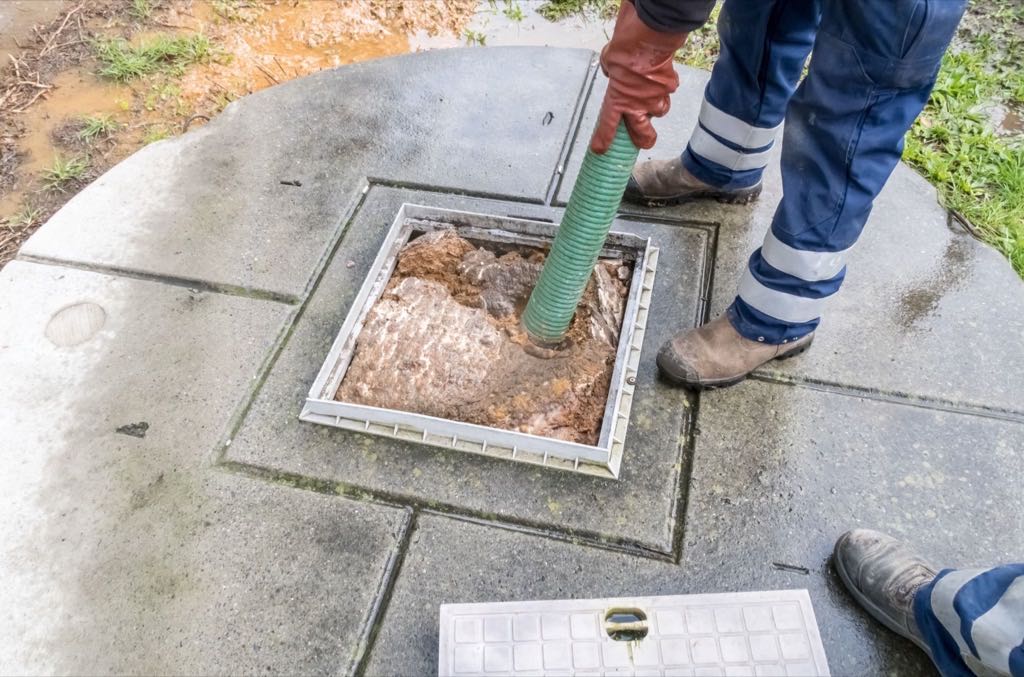
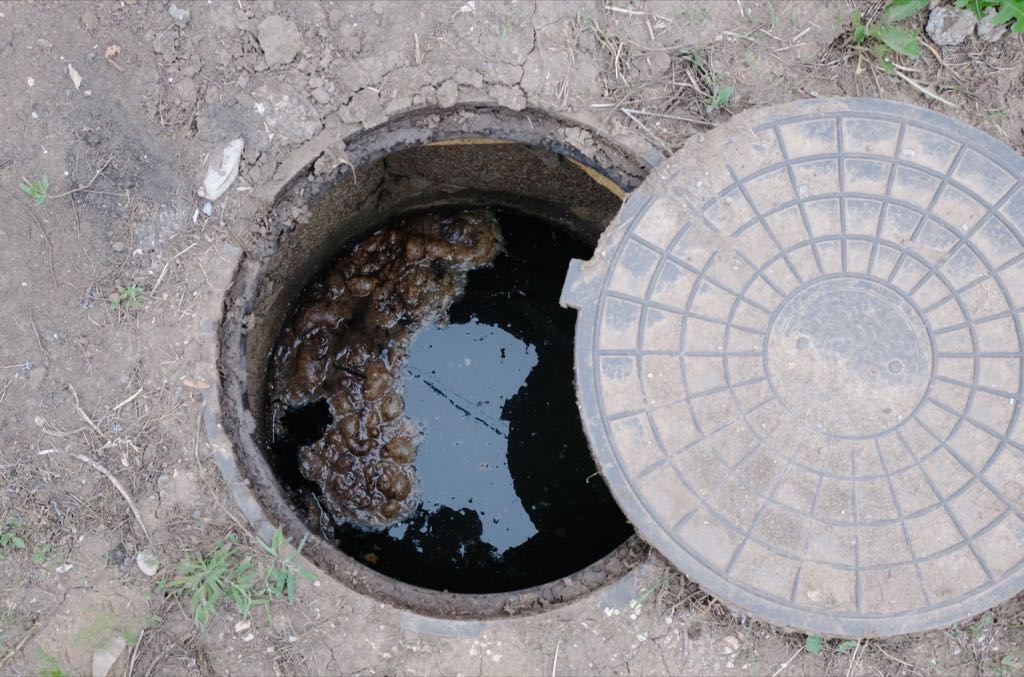
Conversion is a when, not an if — but until it happens, a maintained cesspool protects your property and keeps your household out of emergency territory. That means pumping every one to three years depending on size and use, and paying attention to the early warning signs: slow drains, gurgling plumbing, odors, or soggy ground near the cesspool.
That is the work we do every day, all over Oʻahu. We handle cesspool pumping and service now, and septic system installation, replacement and repair when you are ready to convert. When you want the job itself scoped, see cesspool conversion on Oʻahu — what the work involves, what it costs, and a free inspection to find out what your property can support.
Frequently Asked Questions
Is the 2050 cesspool deadline real?
Yes. It has been state law since 2017, and the state is now funding conversion programs — the direction is not changing. If anything, deadlines for high-priority areas may move earlier.
Can I sell a home with a cesspool?
Yes. There is currently no conversion requirement at sale, but you must disclose the cesspool, and a septic and cesspool inspection is what turns its condition into something both sides can negotiate against. and buyers increasingly negotiate the conversion cost into the price. Bills requiring conversion at point of sale have been proposed, so this could change.
What does a cesspool conversion cost in Hawaii, broken down?
A typical Oʻahu conversion runs $25,000 to $50,000 in total. Roughly: $3,500 to $5,500 for system evaluation and engineering, $500 to $1,500 for permits and Department of Health fees, and $15,000 to $45,000 or more for the system, excavation, leach field and closing the old cesspool. An aerobic treatment unit, needed where the water table is high or soils are poor, adds about $5,000 to $10,000. Site access, soil type and ground difficulty move every one of those figures, and can push them higher.
Can someone come look at my cesspool before I commit to anything?
Yes, and it costs you nothing. We will come out, look at what you have, and give you a free, no-obligation estimate — what conversion options your property can actually support and what the work would realistically involve, before you spend anything on engineering.
How much does a cesspool conversion cost in Hawaii?
Most Hawaii conversions today run $25,000 to $50,000, depending on the property and the type of system. A site assessment gives you a real number.
Which conversion option is right for my property?
It depends on whether a sewer main is nearby, your lot size, your soil, and how close you are to the water. That is exactly what a site and soil assessment answers.
Is there financial help for cesspool conversion?
Yes. A new state loan program launches in late 2026, with possible zero-percent loans for Oʻahu homeowners who apply before 2030. Older grant and tax-credit programs have expired, and a new tax credit has been proposed.
What happens if I do nothing?
Until 2050, nothing — as long as your cesspool keeps working. But a failing cesspool is a health hazard and an emergency expense, and homeowners who wait until the deadline crunch will convert at the worst prices in the tightest market.
What are the DOH cesspool priority levels?
The Hawaiʻi Cesspool Prioritization Tool sorts every cesspool in the state into three levels by census tract: Priority 1, the greatest contamination hazard (the top 25% of scores), Priority 2, a significant hazard (the next 25%), and Priority 3, a pronounced hazard (the bottom half). The Department of Health’s original 2017 report used four categories, with Priority 4 as a placeholder for cesspools not yet analyzed; the tool retired that placeholder. The legal deadline is 2050 for every level, but the Cesspool Conversion Working Group recommended 2030 for Priority 1 and 2035 for Priority 2, and the state’s 2023 pilot grant was limited to Priority 1 and 2 areas.
Will a septic system fit on my lot?
Under Hawaiʻi Administrative Rules Chapter 11-62, an individual wastewater system needs 10,000 square feet of land, one system can serve at most five bedrooms and 1,000 gallons a day, and lots under 10,000 square feet recorded before August 30, 1991 are allowed one system only. The tank is sized by bedroom count — at least 1,000 gallons for up to four bedrooms, 1,250 for five — and the drain field on 200 gallons per bedroom per day. Where the lot or the soil cannot support a drain field, an aerobic treatment unit is the alternative. A site and soil assessment settles it, and ours is free.